
Why Menopause Exists: What Whales, Wisdom and Evolution Are Trying to Tell You
You're Part of a Very Exclusive Club
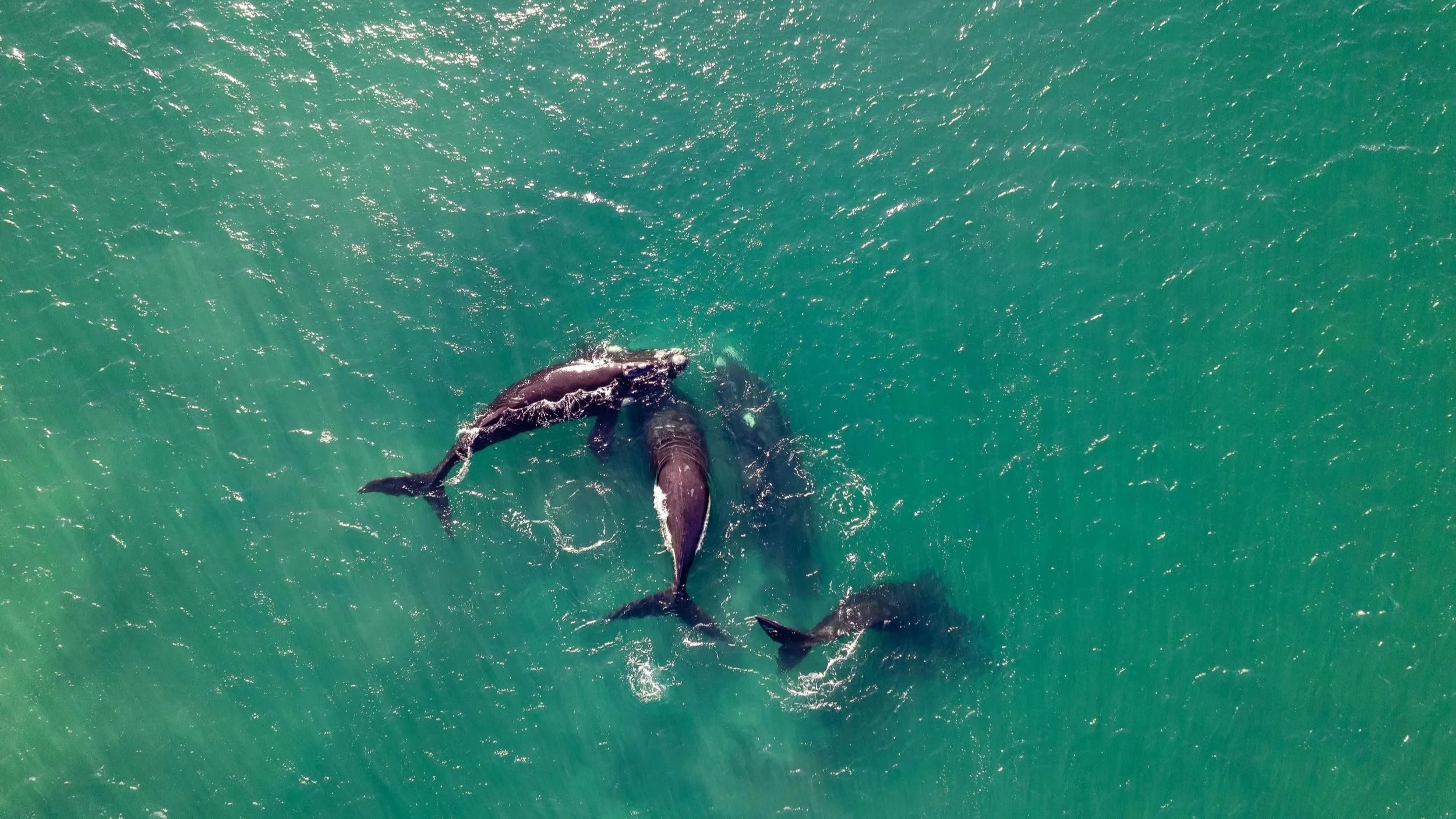
Out of over five thousand mammal species on Earth, only six experience menopause: humans, killer whales, narwhals, beluga whales, short-finned pilot whales, and false killer whales.
That's it. Five whale species and us.
A 2024 study published in Nature examined toothed whales and confirmed something remarkable: in every menopausal species, females evolved to live decades past their reproductive years not by accident, but by design. Menopausal whale species live roughly forty years longer than non-menopausal species while reproducing for approximately the same length of time.
Translation: evolution actively engineered these females to have a long, powerful post-reproductive life.
That includes you.
Menopause isn't ovarian failure. It isn't your body breaking down. It's one of the rarest and most precisely engineered life stages on the planet—something only one primate species has ever evolved. Your biology is doing something almost no other female gets to do.
The Grandmother Hypothesis: Why Evolution Did This
The leading scientific explanation is called the grandmother hypothesis. Anthropologist Kristen Hawkes proposed it in the 1980s based on research with the Hadza people of Tanzania. She observed something striking: post-menopausal women worked harder than younger women. They foraged longer hours. They brought back more food. And children whose grandmothers were active and present had significantly better survival rates than those whose grandmothers had died.
The hypothesis is elegant: in species where female knowledge, skill, leadership and care meaningfully improve grandchild survival, evolution selects for females who live beyond their reproductive years. The grandmother's contribution to her gene line is greater when she stops competing reproductively with her daughters and instead invests in ensuring the next generation thrives.
The orca research confirms this exactly. Post-reproductive grandmothers are more effective helpers than grandmothers still raising their own calves. The grandmother isn't redundant. She's often the most ecologically important member of the pod.
In other words: menopause isn't the end of your usefulness. It's the beginning of a life stage your species has been preparing you for all along.
What Menopause Actually Means
Your biology isn't failing you. It's doing something it has been refined to do over hundreds of thousands of years. The hot flashes are real. The sleep disruption is real. The brain fog is real. None of that is in question. But the underlying transition away from a body designed for reproduction and toward something else isn't a deficiency. It's a graduation.
In every traditional human society anthropologists have studied, post-menopausal women held disproportionate power. They were the healers, lawmakers, keepers of stories, teachers of younger women, negotiators of conflict, protectors of children who weren't biologically theirs. Some of the most stable societies on Earth - the Mosuo in southwest China, the Khasi in northeast India, the Haudenosaunee historically in the northeastern United States placed elder women at the centre of decision-making. The grandmother wasn't peripheral. She was the architecture.
Traditional Chinese medicine understands this. The years after menopause are called "Second Spring." The first spring was for procreation. The second spring is for creation of art, leadership, family, legacy, self. It's understood as a time of clarity and influence, not decline.
Western culture forgot all of this. For a few hundred years, we've organized ourselves around the assumption that a woman's value peaks during her reproductive years and falls away afterwards. Our medicine, our language - "deficiency," "decline," "failure" - all encode this assumption. Then we wonder why so many women experience menopause as a crisis of identity.
But the crisis isn't menopause. It's the mismatch between what your biology is doing and what your culture has told you it means.
Hold Both Truths
This isn't to minimize symptoms. At Hello Mimi, we take them seriously. We support the woman who can't sleep, who is anxious, who is in pain, who can't think clearly, who is grieving the body she had. That care matters.
But we also believe the story you're told about what's happening shapes how you experience it. And the story most women still hear, that menopause is the beginning of a long, slow ending, isn't the story science tells.
Science tells a different story. You're entering a stage of life that evolution invested in. Your continued presence matters not because of what you can produce, but because of what you know, who you are, and the people you carry. The women in their seventies who told you, with quiet certainty, that life got better after fifty weren't being polite. They were telling the truth.
A Different Question
Most menopause content asks: how do I survive this?
We invite you to ask something different.
What were you designed for next?
Not what you've been told you should want. Not what your culture rewards. The version of you that emerges on the other side - clearer, less interested in performing, more honest, more grounded, more sure of yourself - what is she here to do?
The orca grandmother knows where the salmon are. The Hadza grandmother carries food back to camp. The Mosuo grandmother holds her family together. Each is needed. Each is irreplaceable. None is finished.
What do you know now that you didn't before? Who needs what you know? What would it mean to stop treating this stage as a problem to solve and start treating it as the stage you've been preparing for all along?
You are part of a six-species club. You were not designed to fade.
You were designed to lead.
About This Article
This article draws on evolutionary biology research, anthropological studies, and cultural wisdom about menopause. It's designed to offer perspective and reframe how you understand this transition. If you're experiencing menopause symptoms that affect your quality of life, Hello Mimi is here to support you with evidence-based strategies, education, and resources tailored to your needs.
You are part of an evolutionary legacy. And your story isn't over, it's transforming.
Sources
Ellis, S. et al. (2024) "The evolution of menopause in toothed whales." Nature. DOI: 10.1038/s41586-024-07159-9
Nattrass, S. et al. (2019) "Postreproductive killer whale grandmothers improve the survival of their grandoffspring." PNAS. DOI: 10.1073/pnas.1903844116
Hawkes, K. et al. (1989, 1998) — original Hadza grandmother hypothesis fieldwork