
You Don't Have to Overhaul Your Diet: How Small Changes Create Big Results During Menopause
The Overwhelm is Real
Let's be honest: knowing what you should do and actually doing it are completely different things.
You've read the articles, looked at the social media posts. You know that processed foods don't serve your body well. You understand that blood sugar stability matters. You've heard about the importance of whole foods and nutrient density. You get it intellectually.
But the idea of completely overhauling your diet - changing breakfast, lunch, dinner, snacks, the way you grocery shop, the way you cook, everything - feels impossibly overwhelming. Especially during menopause, when you're already managing brain fog, fatigue, mood shifts, and hot flushes.
So you don't start. You think about starting. You plan to start on Monday. Or next month. Or "when life is less crazy." And meanwhile, your energy stays depleted, your blood sugar stays unstable, your 11 a.m. slump is brutal, and you're frustrated with yourself for not having the willpower to make big changes.
Here's what nobody tells you: you don't need big changes. You need the right small changes.
Two deliberate shifts in your daily habits can create disproportionately large impacts on your energy, blood sugar, satiety, sleep, and overall menopause experience. Not eventually. Starting this week.
Change One: Rethink Breakfast (This Might Be the Biggest Leverage Point)
Breakfast sets the tone for your entire day metabolically. And for most women in menopause, breakfast is where the blood sugar chaos begins.
The typical menopause breakfast: Toast with jam. Cereal with milk. A croissant and coffee. A banana and yogurt.
What do these have in common? They're primarily carbohydrates with minimal protein and fat. Your blood sugar spikes rapidly. Your pancreas produces insulin to bring it down. You feel okay for about two hours. Then, around 11 a.m., your blood sugar crashes. You're ravenous. Your brain fog peaks. You're reaching for snacks you didn't even plan to eat.
Sound familiar? This is the 11 a.m. slump that derails so many women's days.
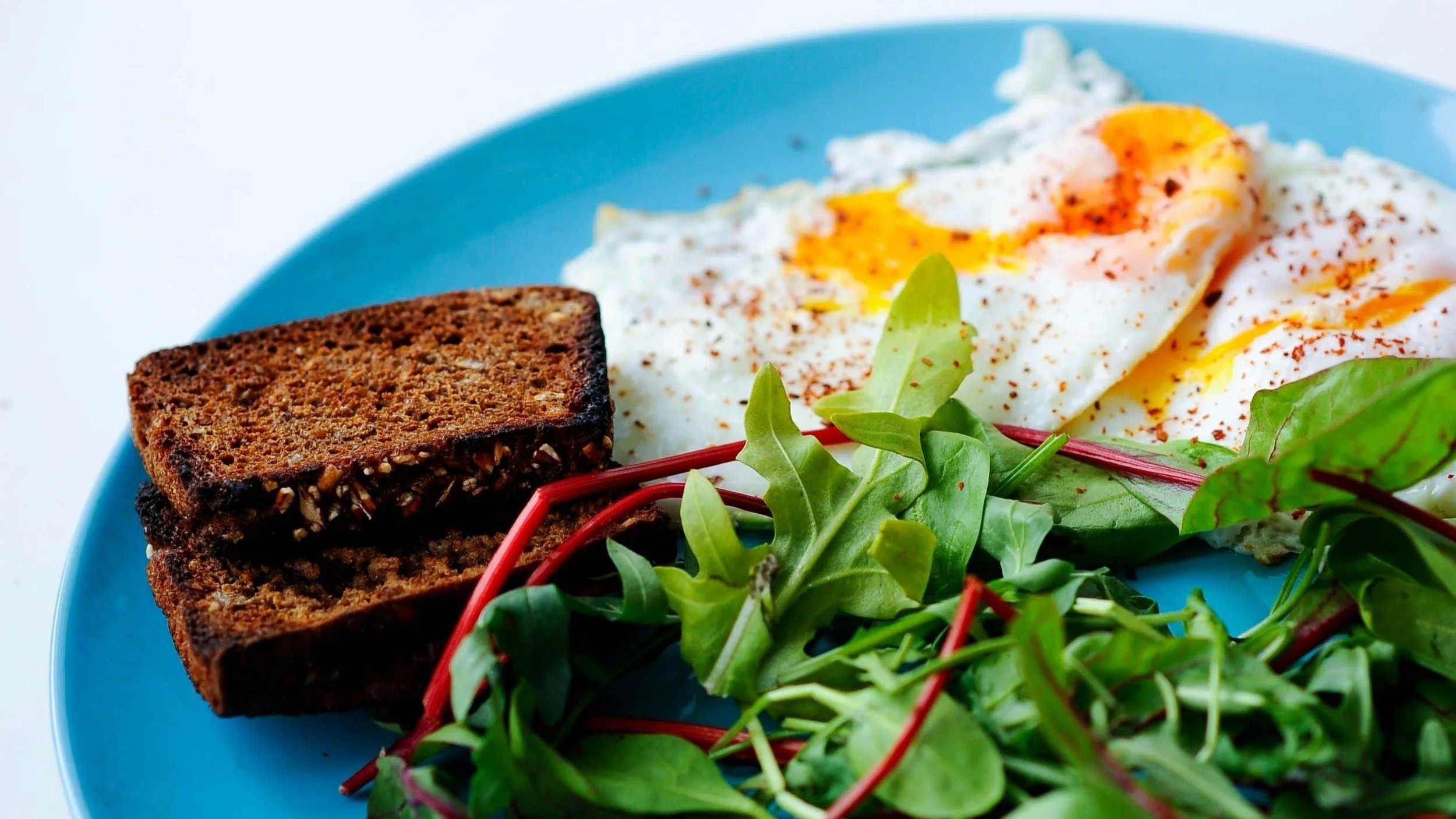
Now imagine a different breakfast: eggs with avocado on whole grain toast. Or oatmeal with nuts, seeds, and berries. Or Greek yogurt with granola and almonds. Or even just a proper breakfast protein: salmon, eggs, cottage cheese with some vegetables and fat.
What changes?
Your blood sugar rises slowly and stays stable. Instead of a spike-and-crash pattern, you get a gentle rise and a plateau. Your energy remains consistent.
You actually feel full. Protein and fat are satiating. You're not just fed; you're satisfied. That matters psychologically.
The 11 a.m. snack craving disappears. Because your blood sugar didn't crash, you don't have an emergency need for quick carbs. You might genuinely not be hungry until lunch.
Your afternoon energy is better. Without the mid-morning blood sugar crash, you don't enter the afternoon already depleted. You have actual energy.
Your brain fog improves. Blood sugar instability creates brain fog. Stable blood sugar creates clarity.
This is one change. One meal. But it creates a cascade of metabolic improvements that ripple through your entire day.
The practical part: start with breakfast. Don't overhaul everything else. Just commit to breakfast with protein, fat, and some carbohydrates for the next week. Eggs and toast. Salmon and vegetables.Full fat Greek yogurt with nuts. Simple.
Notice how you feel. Notice if the 11 a.m. snacking stops. Notice your energy. Most women see a difference within days.
That's not willpower. That's biology responding to better fuel.
Change Two: Create an Eating Window (And Give Your Body Time to Rest)
Here's something most diet advice misses: when you eat matters almost as much as what you eat.
Your digestive system, your metabolism, your hormone regulation - all of these have natural rhythms. Your body is designed to eat during the day and rest (including digestive rest) at night.
But many women eat throughout the evening. Dinner at 7 or 8 p.m. Snacks at 9 or 10 p.m. Maybe even midnight snacking if sleep is disrupted. Your body never gets a break. Your digestive system is working when it should be resting. Your metabolism is active when it should be winding down.
This matters during menopause because:
Sleep is already disrupted. You don't need your digestive system working when you're trying to sleep. Digestion requires energy and blood flow. When your body is trying to digest food, it's not fully resting. You're not sleeping as well.
Blood sugar management is harder. Eating close to bedtime raises blood sugar right before sleep. Your body has to manage that glucose when it should be in rest-and-repair mode.
Your metabolism gets confused. Your body's natural cycles (circadian rhythms) influence metabolism. Eating outside your natural eating window disrupts these cycles.
The change: create a simple eating window. Eat dinner by 7 p.m. (or even 6:30 p.m. if possible). Nothing after that except water or herbal tea.
What happens?
Your sleep improves. Your digestive system gets 11-12 hours of rest before breakfast. Your body can fully focus on sleep instead of digestion.
Your blood sugar is more stable overnight. You're not managing a rising blood sugar right before bed. Your fasting overnight is actually restful, not metabolically chaotic.
Morning hunger cues normalize. When you give your body proper digestive rest, you actually feel hungry at breakfast. Not starving, not urgent, just normally ready to eat. This means breakfast isn't automatic; it's something your body actually needs.
Your energy the next morning is better. Better sleep means better energy. It's a direct connection.
Again, this is one change. One boundary. But it creates disproportionate benefits.
How These Two Changes Compound
Here's what's interesting: these two changes aren't isolated. They work together.
Better breakfast → stable blood sugar → no 11 a.m. crash → better afternoon energy → you don't need evening snacking → you're actually ready to stop eating by 7 p.m. → better sleep → better morning energy → you naturally want a nourishing breakfast.
It's a positive feedback loop. One change makes the next change easier.
You start with breakfast. Within days, the 11 a.m. snacking stops, not because you're forcing it, but because your blood sugar is stable. That success builds confidence. Then you try the eating window. Your sleep improves. That creates momentum.
Suddenly, you're not "on a diet." You're just eating differently because you feel better.
Why These Changes Work (And Why You Don't Need to Be Perfect)
These aren't complicated changes. They're not trendy. They're not a specific diet or system. They're foundational nutritional shifts grounded in how your body actually works.
And they work because:
They address root causes, not symptoms. The 11 a.m. snacking isn't a willpower problem; it's a blood sugar problem. The sleep disruption isn't insomnia; it's partly digestive activity. Fix the root, and the symptoms improve.
They're sustainable. You're not eliminating foods. You're not counting calories. You're not forcing yourself to eat things you don't like. You're just making different choices at two points in your day.
They build confidence. When you make a small change and see a real result, it motivates you. Success breeds success. You're not starting from a place of deprivation and overwhelm. You're starting from a place of "I can do this."
They compound over time. These aren't dramatic changes, but they're consistent changes. Consistency, over time, creates transformation.
Starting is the Only Hard Part
The hardest part of making these changes isn't understanding them. It's actually starting. Because starting means deciding to do something different, even if it's small.
Here's my invitation: pick one. Just one.
If breakfast feels like the obvious place to start, commit to eating protein + fat + carbs at breakfast for one week. That's it. Everything else stays the same. See what happens to your energy and your 11 a.m. cravings.
Or, if your evenings feel like the chaotic part, commit to finishing eating by 7 p.m. for one week. See how your sleep changes.
One week. One change. See what happens.
Most women are shocked. The improvements come faster than expected. Your body responds quickly when it's actually getting what it needs.
And here's the thing: you don't have to be perfect. You're going to have days where breakfast isn't ideal. You're going to have evenings where you eat later. That's not failure. That's being human. The goal isn't perfection. The goal is progress. It's consistency more than intensity.
You don't need to overhaul your diet. You need to start somewhere. And starting with breakfast and eating windows? Those are genuinely powerful places to start.
Your body is ready for this. You've got this. Start small. See what happens. Trust the process.
About This Article
This article is educational and informational about general nutrition principles during menopause. It should not replace personalized medical or nutritional advice. If you have specific health concerns, digestive issues, or medical conditions that affect your eating patterns, work with a registered dietitian or healthcare provider to create an approach tailored to your individual needs. Every woman's menopause journey and nutritional needs are unique.